Vultures & Me
- Wild About Raptors - Emma
- Sep 2, 2022
- 6 min read
Updated: Sep 3, 2022
There are two main reasons why ‘Wild About Raptors’ hasn’t been published sooner. The first reason was I couldn’t think of name for the blog (more on that in a future blog post). The second reason was because I agonised over how to write a decent introduction. Defeated, I had decided to completely skip an introductory blog post. Instead, I wrote a post that got straight into the meaty stuff - raptors, conservation, and science! I had my partner Stuart proofread it and he gave it a thumbs up, but he did ask why there was no introduction to the blog. After explaining that I couldn’t think up a good enough introductory blog post, he suggested that I add more ‘me’ to the first blog by telling readers about the experiences that led me to create ‘Wild About Raptors’. Don’t tell him this, but I’ve taken his advice. So, hello and welcome! Today, in honour of International Vulture Awareness Day 2022, here is my first EVER blog post – Vultures and Me.
'Vultures show us that we all fit in somewhere in the world, that we all have value.'

International Vulture Awareness Day logo for 2022
My first encounter with vultures was when I visited a Bird of Prey Centre at twelve years old. It was a Rüppell’s Griffon Vulture (Gyps rueppelli) called Gandalf that I remember in particular. She, for Gandalf was a she, was just the most magnificent animal I had ever seen. She was huge, her black plumage dappled in white flecks. The skin on her long neck was flushed pink and was covered in fuzzy white feathers. Her glassy eyes looked almost like moons. I had always loved animals, often with my nose stuck in an animal encyclopaedia as a child, but before Gandalf I had never thought about vultures before. This meant that luckily I hadn’t been tainted by any pre-conceived misconceptions about vultures. Because Gandalf was a trained bird, I got to watch her soar, to admire that wingspan as she engulfed the sky. In my mind, Gandalf laid the foundation that vultures were awe-inspiring. I had an instant connection to these birds. Even though my first experiences with vultures were positive and, quite frankly, life changing, I learnt that vultures were generally misunderstood by most people. I probably felt that as an awkward teenager I could relate to vultures. Vultures show us that we all fit in somewhere in the world, that we all have value.

Gandalf the Rüppell’s Griffon Vulture. Photo credit: Fiona Brims
By this point, I had crossed the Rubicon. I learned everything I could about vultures. I read, I googled, and I asked all the questions, absorbing every detail as I went. My curiosity about vultures was all-consuming. At thirteen, I began volunteering at the Centre where Gandalf lived every Saturday and Sunday, mostly painting fences and weeding paths, just to be close to the vultures. When I wasn’t volunteering, I daydreamed about vultures, to the detriment of my school lessons. I eventually grew into a young adult with a fire in my belly and a dream to be a part of vulture conservation.

Gandalf and I. Taken at World of Wings Bird of Prey Centre around 2013
It was when I was around seventeen that I had first heard about Hen Harrier (Circus cyaneus) persecution in the UK. I had spent so much of my energy flying the flag for vultures, that I didn’t really understand what conservation issues were affecting the raptors on my own doorstep. But this recent story about a persecuted Hen Harrier was a very hard hit with the reality stick. At the time, I thought I knew a bit about historic conservation issues such as the impacts of pesticides, owl persecution, Peregrine falcon (Falco peregrinus) population declines etc. But, historic? Hardly! Once, Barn Owls (Tyto alba) were killed because of superstitions; this year, up to 5,000 Barn Owls may be killed in road collisions (data from the Barn Owl Trust). Once, female Merlins (Falco columbarius) produced eggs with abnormally thin shells due to organochlorine poisoning; today their breeding habitat is being replaced by commercial forestry. Our most common owl species, the Tawny Owl (Strix aluco) is now amber listed as a species of conservation concern. Hen Harriers have it worse still as a red-listed species and are often referred to as the most persecuted raptor in the UK. Eurasian Kestrels (Falco tinnunculus) have declined by 65% in Scotland since 1994, according to the Breeding Bird Survey. Whilst vultures are the most threatened group of birds in the world, I realised other raptor species found in the UK and further afield needed our help too. Caring about vulture conservation made me care about all raptor conservation.

‘Be loud about the things that are important you’ – Karen Walrond. Me and Mouse the Hooded Vulture during a display at Muncaster Castle. Photo credit: Mike Andrew
I pursued my dream to work with raptors - fast forward and here I am fifteen years later. In 2015, I applied for a job opportunity that was a new venture between Muncaster Castle and the Hawk Conservancy Trust. I sent in a CV – which may I add was an appalling example of a professional CV! I basically filled in my own details on a CV template I had downloaded from the internet and then added in a ridiculously long paragraph about my obsession with vultures. But somehow my quirky CV worked and, in the end, I was offered the job at the brand-new facility that was to become Muncaster Hawk & Owl Centre (MHOC). Our goals with the new Centre were clearly defined from day one - we were here to make a genuine and positive difference to the lives of wild birds of prey.

In my element working with the legendary MightyMite and Moriarty the Hooded Vultures
One of my key interests in birds of prey is breeding behaviour, which led me on to pursue a ringing licence (watch out for future blog posts about this). I also value zoological breeding programmes for endangered species. I currently work with critically endangered Hooded Vultures (Necrosyrtes monachus) who I’m sure you’ll read more about in posts to come. These vultures are a large part of the conservation and education work we do at MHOC.

Hooded Vultures Mouse and Malarkey. Photo credit: Stuart Lambourne
At the start of 2020, right before lockdown, I attended the ‘Avian Egg Incubation Workshop’, run by Susie Kasielke at the International Centre for Birds of Prey (ICBP). It was the one and only time I got to visit the ICBP, a leading organisation in raptor conservation. I felt so privileged being able to spend five days at the ICBP for the duration of the workshop. Little did I know I was also going to get the chance to greet an old friend on my visit - Gandalf. I knew she had been placed there for breeding, but I didn’t expect the opportunity to say hello to the old girl. I stood there, looking up at the vulture that sparked my passion all those years before. I’m a pretty down-to-Earth person, I don’t really believe in ‘destiny’, and I know I have actively and consciously made choices throughout my career to get me to where I am now. But in that moment, I felt overcome by the knowledge that I would not have been there in that moment if it hadn’t of been for meeting Gandalf many years before. It really was a full circle moment for me.

Gandalf at the International Centre for Birds of Prey, 2020
‘Wild About Raptors’ is simply the next level to which I can take my passion for raptors as I strive to share these incredible birds with more people. I still don’t know exactly what category the blog belongs to or will belong to in the future. For now, I think it will mainly function as a science communication blog, but hopefully readers will join me on the occasional birding adventure, or you might see the odd book recommendation pop up here or there.
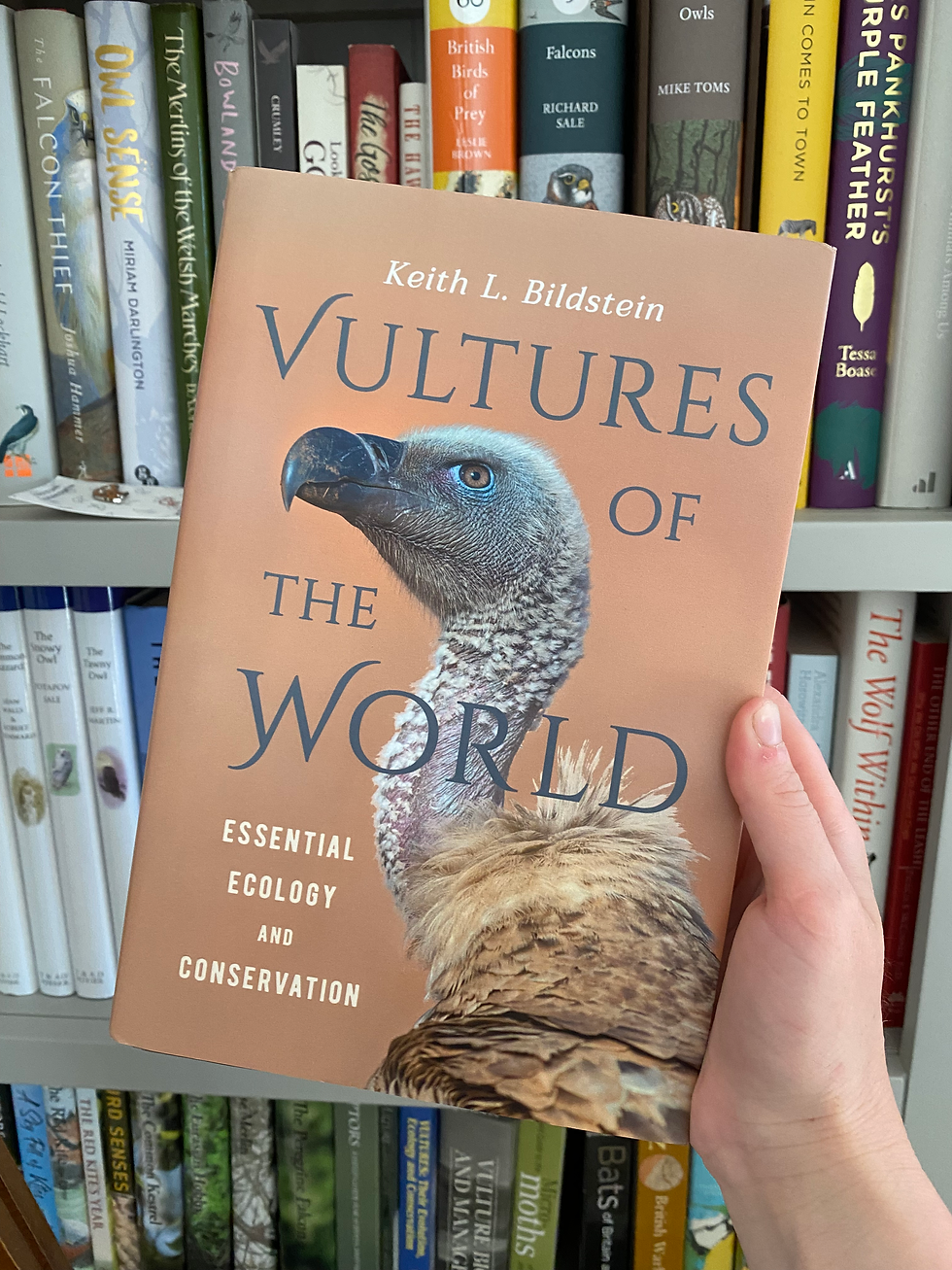
But now you know that the main thing you should know about me is I love vultures. To celebrate these fantastic birds, I’m dedicating every blog post to vultures this September, and plan to do so every September in the years to come. In next week’s blog, I share what I believe to be the top five most fascinating facts about vultures. Thanks for reading raptor friends!


Comments